Have you ever seen your cat tuck its paws beneath its body so they completely disappear from view? Paw tucking in cats is an interesting phenomenon and one that not all cats do. If you’re lucky enough to have a cat who tucks its paws, you might be wondering what it means when your kitty takes on this cute position.
What Is Paw Tucking in Cats?
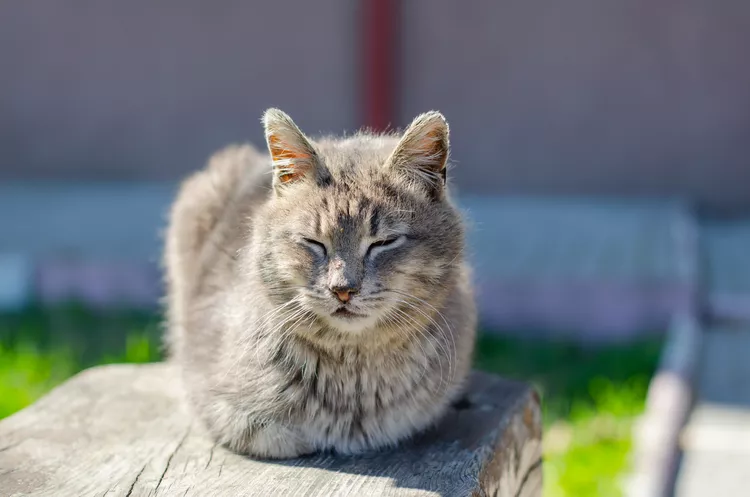
Most often, when you see a cat tucks its paws under its body, it also wraps its tail tightly around or under its body, hiding it from view. This position makes the cat look bit like a hen sitting on a clutch of eggs, or as some people like to say, a loaf of bread (a “cat loaf,” if you will).
Cats don’t always tuck their paws, but when they do it’s an adorable sight. So why do cats tuck their paws? Experts say it’s a sign that your cat is feeling comfortable and content, or—possibly—cold.
Why Do Cats Tuck Their Paws?
Sometimes cats tuck their paws when they are resting and feeling extremely comfortable and relaxed. Much like a human might prop their feet up while reading a favorite book or watching a movie, relaxed cats sometimes tuck their paws under their bodies.
Most of the time, cats are on high alert. Like a mobster who never sits with his back to a doorway, cats are always watchful and attentive to any potential threats or dangers in their vicinity. The fight or flight response is alive in well in our domestic cats, even if relatively few dangers lurk inside our homes compared to the great outdoors.
For this reason, cats are always listening with their highly sensitive ears, moving them this way and that, like little satellite dishes. Cats also keep watch over their environment with their excellent eyes, which can pick up the smallest of movements. Cats even use their sense of smell to know if someone knew has entered the room, whether human or animal.
If a cat is not completely at ease for whatever reason, it wants to be able to immediately jump into action if it hears or sees something suspicious. Even if a cat is resting, it usually keeps its feet in a position that allows it to leap to its feet at a moment’s notice and flee or make an offensive move toward a perceived threat.
Additionally, cats use their paws—with their attached claws—as weapons. If a cat stows its weapons underneath its body, it can’t quickly slash its claws against an attacker. So a cat that is not completely certain about its safety and well-being would never tuck its paws under its body.
Ultimately, a cat lying down with its paws tucked beneath its body is in a very vulnerable position. The cat’s means of running away, as well as its means of defense, are trapped beneath the weight of its body. This means that if you see your cat tucking its paws, you know that your cat feels just about as safe and secure as a cat can feel and is happily relaxing.
Another reason cats tuck their paws is for warmth. Have you ever felt so cold that you pulled your hands inside the sleeves of your jacket to warm them up? Cats don’t wear clothes (well, most cats don’t), but they also have a way to warm up their cold paw pads—by tucking them under their body. Much like a hen keeps her clutch of eggs warm beneath her warm body, a cat can warm up its paws underneath its warm, furry underside.
Next Steps
Paw tucking is a fairly innocuous behavior. As an added bonus, it’s incredibly adorable! If you see your cat tucking its paws more in wintertime, you cat might be feeling chilly. If so, you can offer a warm, fuzzy blanket or cozy pet bed or turn up the thermostat a degree or two to help keep your kitty’s paws comfortable. If you have a very shorthaired cat or a hairless cat, you might even try a cat sweater or kitty pajamas to keep your cat comfortable. Always talk to your vet before putting your pet in clothes.