Knowing the different types of cat meows can help you better empathize with and understand your favorite furry friend. Although cat language is composed of a combination of body postures, scent signals, and vocalizations, a cat's yowls, growls, hisses, and purrs are what get our undivided attention, especially at 5 a.m.
Humans are scent-blind compared to cats, and we often overlook tail talk and ear signals that make up the majority of cats' communication. So, when it comes to cat meows, is there a way to know what your cat is trying to say?
What Is Your Cat Saying to You?
Kinds of Meowing
There are four major categories of meows among cats:
- Murmur patterns: These include purrs and trills.
- Vowel patterns: Meows in all their variations (cats can produce several diphthongs, too).
- Articulated patterns: Chirps and chattering that express frustration.
- Strained intensity patterns: Warnings such as hisses and growls.
Experts also speculate that some cat vocalizations may be so subtle, or pitched at such a high frequency, that only other cats can hear them.
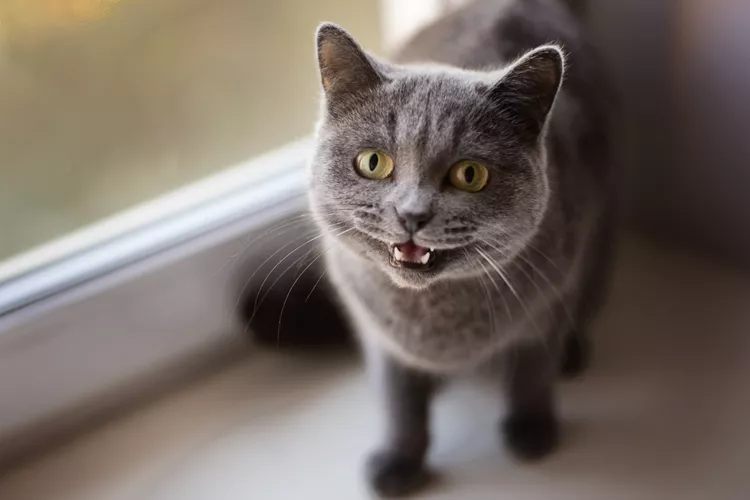
Not all cats are vocal. Persians and the blue Chartreux breeds, for instance, tend to be rather quiet. Other cat breeds never shut up; Siamese cats are especially talkative.
What Does Meowing Mean?
Felines use a wide range of vocalizations to communicate with other cats but seem to reserve “meows” primarily for talking to their people. What exactly does your kitty want? Are they hurling cat curses at you, praising your taste in art, or just pestering you for the fun of it?
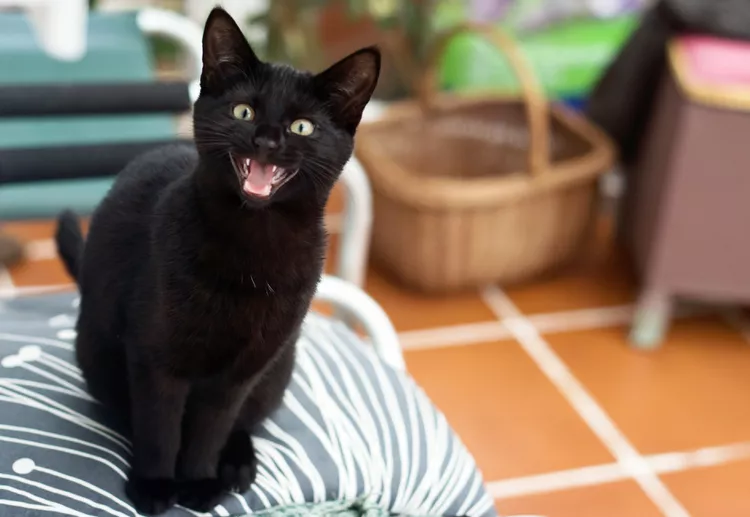
Meows are demands: "Let me out," "Let me in," "Pet me," "Play with me," "Feed me!" As the cat becomes more passionate and insistent, their meows grow more strident and lower-pitched. Meow demands most frequently take place in the wee hours of the night when owners want to sleep. Some meows can even sound like crying.
Nocturnal Meowing
Cats normally sleep 16 hours a day and are most active at night. They go through the motions of mouse-patrol whether outside or indoors. It’s annoying, but it’s normal.
The determined and savvy cat visits the bedroom, and may even snuggle and sleep with you for a portion of the night until it decides you've both had enough sleep. It first offers loving head-bonks, nibbles your nose or toes, or drops toys on your head. If that doesn’t rouse you, the meows escalate.
Once you roll out of bed, the cat scampers ahead of you to its empty food bowl. Filling the bowl may, indeed, temporarily stop the yowls. It’s hard to meow with a mouthful of kibble. But something else is going on: Your cat has trained you.
How to Handle Cats' Meowing
Giving in to meow demands tells the cat that pestering you is an effective means of getting its way, but keep in mind that your cat may also be alerting you to a problem.
There are health issues that can prompt excess meowing. Cats experiencing pain may meow or howl. Deaf cats, old cats suffering from feline dementia, stressed cats suffering from separation anxiety, and those with thyroid, heart, or kidney issues may yowl. If constant meowing is a new behavior in your cat, have them evaluated by a veterinarian to rule out underlying health issues.
In otherwise healthy cats, though, the only way to extinguish this behavior is to totally ignore the cat. That means you don't get up to feed her; you don't indulge in toe-tag games; you don't yell at her, spray her with water, or give any attention at all. That’s hard to do when she’s paw-patting your nose or shaking the windows with yowls, but it's important.
Practice Tough Love to Stop the Meowing
Invest in earplugs, shut the bedroom door, or confine the cat to another room on the other side of the house. It can take weeks, sometimes months, to get rid of this behavior if it’s been going on for a while. Be aware that the behavior will get worse right before it goes away. Behaviorists call this an extinction burst, so be prepared and don't give in.
It’s either that, or you can remain at the beck and call of your favorite feline for the duration of your relationship.