Heartworm disease is a life-threatening parasitic infection that affects the hearts and lungs of dogs. Because heartworms are spread solely by the mosquito, any dog exposed to mosquitos is at risk. Heartworm disease is a relatively common disease in dogs everywhere in the United States. Because of this, the American Heartworm Society recommends year-round treatment with a Heartworm preventative for all dogs in the U.S. regardless of climate.
It’s important to note that dogs living in areas that are warmer and more humid are at the highest risk since they tend to have more exposure to mosquitoes. Investing in a dog mosquito repellent can help prevent mosquito bites.
What Is Heartworm?
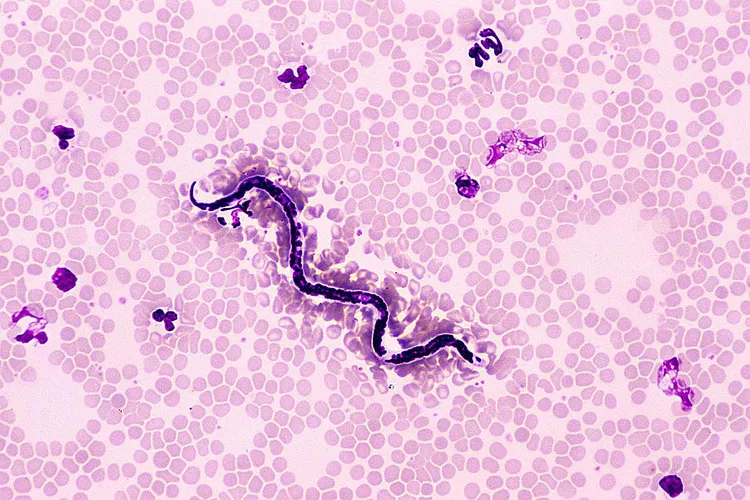
Heartworm disease is caused by a parasite called Dirofilaria immitis. The larvae of these parasites enter the dog when a mosquito bites them and they travel through the blood vessels to the heart and lungs, were they mature and can cause serious health problems including death.
What Are Heartworm Preventatives
Though termed "prevention," heartworm preventatives are actually parasitacides that kill the microscopic heartworm larvae present in the bloodstream. These medications are given on a monthly basis to kill and remove heartworm larvae before they can develop into adults. Because these medications are designed to kill the immature larvae, it is essential to administer them on a regular basis. If you are late on a dose by a a month or less, it is recommended to give the missed dose immediately and continue to give the medication every 30 days. If you have missed more than one dose of medication, it is important to speak with your vet before restarting since a long gap in treatment could allow the heartworms to mature and it may no longer be safe to kill them off in the same manner without veterinary supervision.
Testing & Prevention
All dogs should have a heartworm test done by a veterinarian once per year. If you miss more than one dose of heartworm prevention, contact your vet. Your dog may need to be tested for heartworm again before restarting the medication. It is important not to give heartworm prevention to a heartworm positive dog unless specifically instructed to do so by a veterinarian. In some situations, giving heartworm prevention to a dog that is already heartworm positive may be harmful. Your veterinarian may recommend careful supervision and additional medications and precautions for treatment in those cases. If you suspect your dog is heartworm positive or had a long gap in their preventative, talk to your vet about the next steps recommended.
Giving your dog heartworm prevention is an essential part of being a responsible dog owner. In addition, it is safer and less expensive to prevent heartworms compared to putting your dog through heartworm treatment. heartworm treatment can be costly and can be risky to the dog. heartworm prevention costs vary per year depending on the size of the dog and the type of medication used.
Talk to your veterinarian about the ideal heartworm prevention for your dog. There are several different medications that can be used on a regular basis to prevent heartworm infestation.
Types of Heartworm Preventatives
Ivermectin
Some Brand Names: Heartgard Plus (by Boehringer Ingelheim); Iverhart Plus and Iverhart Max (by Virbac); Tri-Heart Plus (by Merck)
Ivermectin-based Heartworm medications are given orally once per month. Ivermectin is a broad-spectrum antiparasitic drug used in humans and animals. In monthly Heartworm prevention, the dose of ivermectin is low but effective at killing Heartworm larvae. In the above brands of Heartworm prevention, the "plus" refers to the addition of pyrantel pamoate, which kills common parasites like hookworms and roundworms. The "max" indicates the addition of praziquantel as well, which kills tapeworms.
Side effects of ivermectin are rare. If side effects occur, they are usually neurologic in nature (central nervous system depression, wobbly gait). Some dog breeds, such as the Collie and Shetland Sheepdog, are known to be sensitive to ivermectin due to the ABCB1/MDR1 gene mutation. However, at such a low dose, ivermectin-based heartworm prevention medications rarely cause side effects or reactions, even in sensitive breeds.
Milbemycin Oxime
Some Brand Names: Trifexis (by Elanco); Sentinel (by Merck)
Milbemycin-based Heartworm medications are also given orally once per month. Like ivermectin, milbemycin oxime is a broad-spectrum antiparasitic drug. It is used only in animals, not in humans. Milbemycin also kills roundworms, hookworms, and whipworms. Both Trifexis and Sentinel include an additional drug to prevent flea infestation. The flea prevention in Trifexis, spinosad, kills fleas. The one in Sentinel, lufenuron, prevents flea eggs from hatching but does not actually kill adult fleas.
There are generally few side effects of milbemycin if given as directed though side effects with any medication are possible. Symptoms of milbemycin overdose tend to be neurological in nature (stupor, tremors, wobbly gait). There is no specific breed sensitivity noted at this time.
:strip_icc():format(webp)/SPR-Pets-v2-The-6-Best-Places-to-Buy-Pet-Medication-Online-in-2021-4772668-final-01-9fa83886a1d9452cab1d4f4416430ee3-43fe3feaf268441c9b1b8cf910a4fae7.jpeg)
Selamectin
One Brand Name: Revolution (by Pfizer)
Selamectin is applied topically once per month. It is an antiparasitic drug used in animals only that kills fleas, prevents Heartworm infections and treats and controls hookworms, roundworms, and ear mites. The product comes in a small tube that is applied to the skin (not the hair) on the back, between the shoulder blades. Proper application is essential to ensure effectiveness.
Though rare, the side effects of selamectin may include loss of appetite, excessive drooling, vomiting, diarrhea, muscle tremors, fever, rapid breathing, or seizures. At the site of application, there may temporarily be stiff or clumped hair, hair discoloration, hair loss, skin irritation, an oily spot or a powdery residue.
Moxidectin
Some brand Names: Advantage Multi (by Bayer); Proheart (by Zoetis)
Moxidectin is an antiparasitic drug used in animals only that prevents Heartworm infections and helps control hookworms, roundworms, and whipworms as well as some skin mites that cause mange. Moxidectin is administered one of two ways: Advantage Multi is applied topically; Proheart 6 and Proheart 12 are injectable drugs.
Advantage Multi comes in a small tube that is applied once a month to the skin (not the hair) on the back between the shoulder blades. It must be applied correctly to work properly. In addition to moxidectin, Advantage Multi contains imidacloprid, which kills fleas. Though rare, the side effects of Advantage Multi may include lethargy, itching, and hyperactivity. At the site of application, there may temporarily be stiff or clumped hair, hair discoloration, hair loss, skin irritation, or a powdery residue.
Proheart is given as a subcutaneous (under the skin) injection once every six to 12 months depending on the variety used. The moxidectin is in a sustained release formula that allows it to last for the labeled duration. This form of Heartworm prevention is ideal for many owners because it eliminates the need to remember monthly treatments. Potential side effects, though uncommon, include mild to severe allergic reactions, lethargy, seizures, vomiting, diarrhea, weight loss, and fever.