
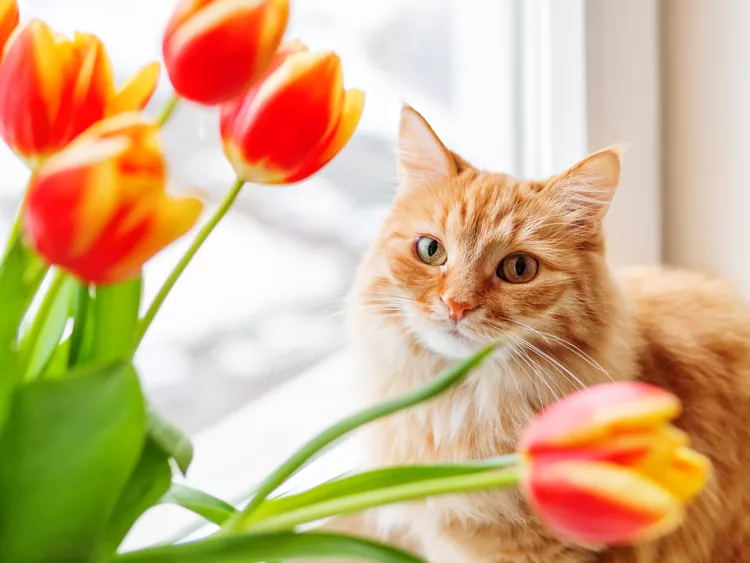
As spring unfolds, tulips emerge in all their colorful glory. These eye-catching flowers, belonging to the Tulipa genus, are undeniably beautiful, but they harbor an unfortunate drawback: they’re toxic to cats. Cats are curious by nature, so it’s up to you as a responsible pet parent to know which plants are harmful to cats and keep them away from your kitty.
Here's what to know about the risks of tulips for cats, what to do if your cat ingests this flower, and how to keep tulips out of your kitty's paws (and mouth) in the first place.
Are Tulips Toxic to Cats?
Every part of the tulip plant is harmful to kitties. This includes the stem, flowers, leaves, and bulbs. But, the bulb contains the highest concentration of toxins, making it particularly dangerous for cats to ingest.
“The specific toxic components in tulips are allergenic lactones called tulipalin A and B as well as other alkaloids present in the bulbs,” says Ashly Smith, DVM, the regional medical director for Small Door Veterinary.
While these compounds can induce allergic reactions in humans and animals, humans typically don’t consume tulips, so skin irritation is our primary concern. However, if a curious cat ingests tulips, it can lead to internal tissue irritation and result in issues ranging from minor discomfort to liver or kidney damage.
Symptoms of Tulip Toxicity in Cats
If a cat consumes a tulip petal or two, they’ll likely only experience mild gastrointestinal upset and mild mouth, lip, and tongue irritation. However, Smith says ingestion of a significant amount of the plant or any part of the bulb can lead to more severe symptoms, such as:
- Severe gastrointestinal symptoms, like repeated vomiting or persistent diarrhea
- Excessive drooling
- Lethargy
- Difficulty breathing
- Rapid heart rate
- Tremors
- Seizures
While larger ingestions can be lethal, the prognosis of tulip poisoning in cats is usually good. But, the sooner you recognize the signs that your kitty has eaten something toxic and seek veterinary care, the better.
What To Do If Your Cat Eats Tulips
If you suspect your cat has consumed any part of a tulip plant or is showing signs of illness, immediately contact your veterinarian, the Pet Poison Helpline (855-764-7661), or ASPCA Animal Poison Control Center (888-426-4435). These professionals can assess whether your cat needs immediate veterinary attention or if you can monitor them at home.
When speaking to the vet, it’s important to provide them with a timeline, information about your cat’s symptoms, and, if possible, the amount and parts of the tulip they ingested.
Smith adds that certain signs indicate the need for urgent medical attention, including severe vomiting, difficulty breathing, tremors, seizures, or collapse. If your cat exhibits these signs, take them to a pet emergency clinic right away.
In instances where a cat has ingested only a petal or two, treatment is often unnecessary. However, in more serious cases, a vet may induce vomiting (if ingestion occurred recently), administer activated charcoal to absorb toxins, provide intravenous fluids to maintain hydration and flush out toxins, and give medications to control symptoms, explains Smith. Never attempt to do any of those procedures at home, as they could lead to more harm. In severe cases, additional interventions may be necessary to manage complications and support the cat’s recovery.
Preventing Tulip Toxicity in Cats
Protecting your feline companion from the dangers of tulip toxicity involves proactive measures and careful attention to your surroundings. Here are steps you can take to minimize the risk:
Educate Yourself
Awareness is the first line of defense. Familiarize yourself with plants that are toxic to cats, including tulips. Knowing which flowers and foliage pose a threat will enable you to create a safer environment for your cat.
Make Your Garden Safe
If your cat goes outdoors and you have tulips in your garden, consider using fencing to prevent your cat from accessing flower beds containing tulips. Alternatively, you could bid farewell to the tulips and replace them with cat-friendly options. Some good choices include:
- Catnip (your cat will love you for this one)
- Sunflowers
- Asters
- Cosmos
- Zinnias
- Jasmine
- Roses
- Violets
- Marigolds
- Petunias
- Snapdragons
Choose Safe Indoor Plants
While it might be disappointing to pass on that beautiful tulip bouquet from the farmer’s market, keeping this flower out of your home is safest for your kitty. The good news is there are plenty of beautiful, cat-safe houseplants and flowers. Some good options include:
- Orchids
- African violets
- Spider plants
- Boston ferns
- Polka dot plants
- Bromeliads
- Haworthias
- Gloxinias
- Areca palms
You can also give your kitty cat grass, which can satisfy their desire to nibble on plants.