
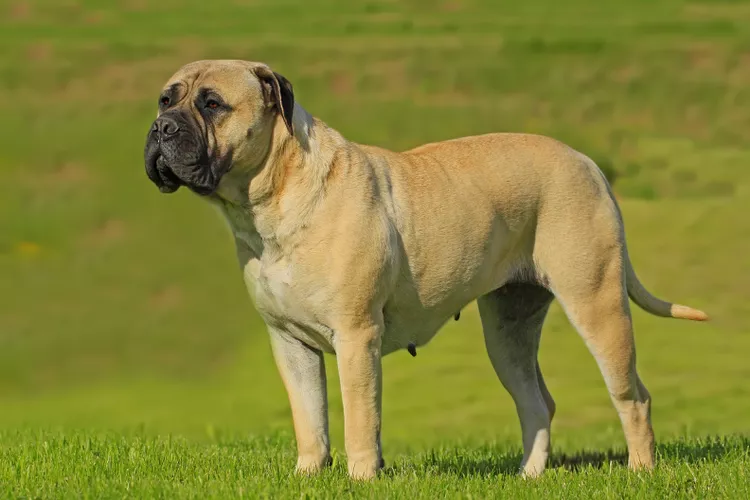
The Bullmastiff is a large-boned and muscular working dog from England with a short coat. Its origins as a cross between the Mastiff and the bulldog are apparent in its appearance. In personality, this breed is smart, alert, and loyal. Though the Bullmastiff has a natural protective instinct, the breed is typically quite gentle around children and others who pose no threat.
Breed Overview
GROUP: Working
HEIGHT: 24 to 27 inches
WEIGHT: 100 to 130 pounds
COAT: Short, dense coat
COAT COLOR: Fawn, red, or brindle with accents of black
LIFE SPAN: 8 to 10 years
TEMPERAMENT: Loyal, protective, alert, loving, companionable, calm
HYPOALLERGENIC: No
ORIGIN: England
Characteristics of the Bullmastiff
Despite their seemingly imposing appearance, Bullmastiffs are a calm, cool, and collected breed. They crave human companionship and will be fiercely loyal to their owners and family, preferring to be by their side at all times. They thrive with formal training and are often regarded as docile and sweet.
History of the Bullmastiff
The Bullmastiff breed was developed in England during the mid-1800s. Gamekeepers needed a dog to protect their game from poachers, so they experimented with cross-breeding. At the time, bulldogs were fierce and intrepid—much more so than today's bulldog—yet the breed was too small to take down a human. The mastiff was too large and slow to do the job, but crossing the two breeds resulted in the ideal guard dog. The brindle color was preferred as it provided natural camouflage. This breed was imported to guard the De Beers diamond mines in South Africa.
Though the Bullmastiff still makes an excellent guard dog, it is better known today as a friendly companion and wonderful family dog. This breed was recognized by the American Kennel Club (AKC) in 1933.
Bullmastiff Care
Bullmastiffs are very gentle companions and protectors that make lovely family pets. They will get along wonderfully with children when properly trained and socialized. As large dogs, they have the potential of knocking down small children or reacting poorly to any mistreatment by a small child. Supervise the dog whenever it is with small children and consider waiting until your children are older before adding a Bullmastiff to your household.
They like to live indoors with others, but they do tolerate a household where their people are gone during the workday, as long as they are given attention before and after the absence. However, if left alone in a yard without access to family life, a bullmastiff can develop some destructive behaviors. Above all, the Bullmastiff is a loyal and affectionate house pet that forms a close bond with its humans.
Exercise
The Bullmastiff is not overly active, but the breed needs routine exercise to remain fit and motivated. Take your dog for a couple of walks each day and start good leash training from puppyhood. The Bullmastiff will be so large and powerful in adulthood that if it pulls on the leash, you will have a difficult time controlling it. Additionally, these dogs probably shouldn't be allowed to run free in a dog park, as they're unlikely to do well with other canines. The Bullmastiff is vulnerable to overheating, due to its short snout. Don't overdo exercise, and be sure to keep your dog cool in hot weather.
Grooming
The Bullmastiff has a short coat that typically needs little more than routine grooming. This breed is a moderately low shedder. Additionally, the Bullmastiff's ears and facial skin folds (if present) should be kept clean and dry. This breed is a drooler, so be prepared when it shakes its head—carrying a slobber rag is often in order for this one.
Your dog should be able to naturally wear down its nails through activity, but check them and give them a trim if you hear clicking on the floor. It's also good to pay attention to your dog's dental hygiene and brush its teeth a couple of times per week.
Training
Like all dogs, proper training and socialization are important for the Bullmastiff. Overall, the breed is smart but also has an independent streak, thus training will require firm consistency. Curb any habit of jumping on people early on, as this can lead to a hazardous situation once the dog is fully grown.
Bullmastiffs are not a good match for multi-pet households. They have a high prey drive and may harass cats and other small pets, even if they are raised together. Similarly, they don't do well with other dogs. In particular, male Bullmastiffs do not live peaceably with other male dogs of any breed. They will confront any animal entering its territory.
Common Health Problems
Responsible breeders strive to maintain the highest breed standards as established by kennel clubs like the AKC. Dogs bred by these standards are less likely to inherit health conditions. However, some hereditary health problems can occur in Bullmastiffs. Some conditions to be aware of include:
- Hip dysplasia: A condition in which the hip sockets form abnormally.
- Ruptured cruciate ligament: The partial or complete tear of the ligament that connects the back of the femur with the front of the tibia.
- Gastric dilatation-volvulus: A disease in which the dog's stomach dilates and then twists.
- Ectropion: A common condition in which the lower eyelids droop or roll out.
Diet and Nutrition
A Bullmastiff should be fed twice a day, with each meal consisting of 1 1/2 cups to 2 cups of dry dog food, depending on your pet's size and activity level. Always ensure your dog has access to fresh, clean water. Your dog's needs will change throughout its lifespan, so it's a good idea to discuss their health with your veterinarian to develop the right feeding schedule, amount, type of food, and exercise routine.
Feeding your dog two meals can help prevent the problem of bloating and stomach torsion (gastric dilatation-volvulus). When a dog gulps down food or eats a large meal, it can lead to excessive gas production. In this breed, the stomach may then twist and cut off the blood supply, which becomes a medical emergency.
Additionally, make sure to monitor your dog's weight and take action if you notice any additional pounds creeping on. Obesity can shorten your dog's lifespan and predispose it to additional health conditions.
Where to Adopt or Buy a Bullmastiff
Check with your local area shelter or rescue groups to find Bullmastiffs available for adoption in your area. The American Bullmastiff Association's mission is to find homes for unwanted Bullmastiffs, while Mastiffs to Mutts Rescue Inc. provides rescue efforts in the mid-Atlantic states. The ABA also provides a list of breeders but does not guarantee or endorse any particular person or group. Generally, you can expect to spend around $1,000 to $1,500 for a Bullmastiff puppy from a breeder.
Dog Breed Overview
Make excellent watchdogs
Don't need a significant amount of exercise
Has short hair that's easy to care for and doesn't shed significantly
Large and powerful, which can be difficult for small people or children to handle
Potentially aggressive toward other animals and people
Have a short lifespan of just eight to 10 years
:strip_icc():format(webp)/dog-laying-in-front-of-suburban-house-519517073-5921f9733df78cf5fa9b382f.jpg)
More Dog Breeds and Further Research
Before you decide whether a Bullmastiff is the right dog or you, be sure to do plenty of research. Talk to other Bullmastiff owners, reputable breeders, and rescue groups to learn more.
If you’re interested in similar breeds, check out:
There's a whole world of potential dog breeds out there—with a little research, you can find the right one to bring home!
-
How big is a Bullmastiff?
Very big! Bullmastiffs grow to be from 100 to 130 pounds.
-
How much is a Bullmastiff?
Bullmastiffs cost from $1000 to $3000, depending on your location.
-
How fast can a Bullmastiff run?
Because Bullmastiffs are such large dogs, they really can't run at all other than the rare very short sprint.