
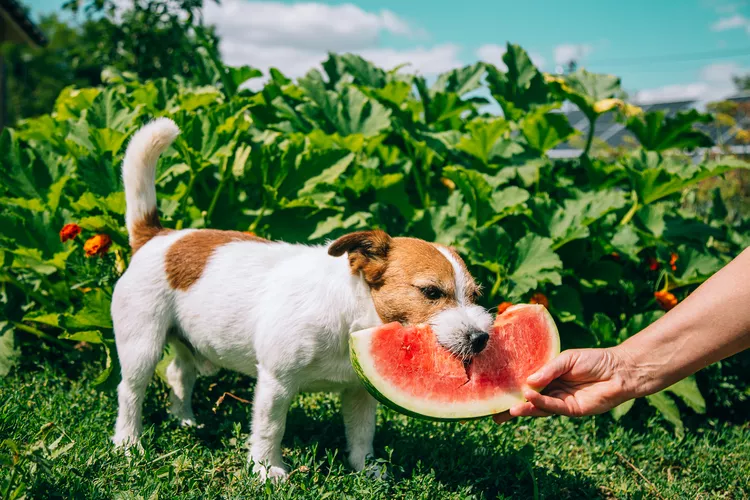
You’re enjoying a hydrating slice of watermelon on a sizzling summer’s day when you notice your dog looking up at you with expectant eyes. Naturally, you wonder, “Can dogs eat watermelon?”
Good news, pups. Watermelon is one of several fruits dogs can enjoy in moderation, but there are some precautions to keep in mind. We spoke with two veterinarians to get all the juicy details about watermelon for dogs and how to safely feed this summertime delight to your four-legged pal.
Meet the Expert
Sam Meisler, DVM, is the founder of PetWellClinic.
Amy Attas, DVM, is the founder of City Pets.
The Benefits of Watermelon for Dogs
Watermelon can be a healthy snack for your dog when fed safely and in moderation. Here are some reasons to consider treating your dog to an occasional piece.
Hydration
“Because they're 92% water, watermelons can help keep your dog hydrated, especially as the temperature rises,” says Sam Meisler, DVM.
Low in Calories
Watermelon is relatively low in calories—about 23 calories for half a cup of diced melon. This makes it a healthy occasional treat for dogs who need to manage their weight, explains Meisler.
Rich in Vitamins and Minerals
According to Amy Attas, DVM, watermelon is rich in:
- Vitamin C, which supports immune function and wound healing
- Beta carotene, which converts into Vitamin A—an important vitamin for immune function and vision
- Vitamin B6, which aids in metabolism and blood production
- Lycopene, which gives watermelon its red color and acts as a powerful antioxidant
Risks and Considerations
Before you toss your pup a piece of watermelon, there are a few important precautions to consider:
- Sugar content: Watermelon is high in natural sugars. Consistently feeding your dog excessive amounts of watermelon can contribute to weight gain and may lead to issues like obesity or diabetes, especially in dogs prone to these conditions, says Meisler. If your pup is at risk of these conditions, avoid giving them watermelon and other fruits.
- Rind and seeds: Do not feed your dog the rind or seeds of the watermelon. Attas and Meisler both warn that the seeds and rind could cause an upset stomach, choking, or an intestinal blockage.
- Gastrointestinal upset: Introducing watermelon into your dog’s diet too quickly or feeding too much can cause gastrointestinal upset, including diarrhea or vomiting.
- Allergic reactions: While rare, some dogs may have allergic reactions to watermelon. Signs of an allergic reaction in dogs can include itching, swelling, hives, diarrhea, or vomiting. If your dog shows any signs of an allergic reaction after consuming watermelon, discontinue feeding it and contact your veterinarian right away.
How Much Watermelon Can a Dog Eat?
Meisler suggests feeding your dog no more than 2-3 bite-sized pieces of watermelon daily. Note that "bite-sized" will differ based on your dog's size. Watermelon should only be given as a treat, not as a main part of your dog’s diet.
Meisler adds that all treats combined, including watermelon, should make up no more than 10 percent of a dog’s daily caloric intake. This 10-percent guideline helps prevent nutritional imbalances, side effects, and adverse health effects like obesity that may result from overconsumption of food outside a dog’s regular diet.
How to Safely Feed Watermelon to Dogs
Safely feeding watermelon to dogs involves several key steps to ensure your canine companion can enjoy this tasty treat without any negative effects. Here’s how to do it.
- Remove the rind and seeds: Before feeding watermelon to your dog, remove all seeds and the tough outer rind.
- Cut into bite-sized pieces: Cut the seedless watermelon flesh into small, bite-sized pieces that are easy for your dog to chew and swallow. Avoid giving large chunks of watermelon, as they may present a choking risk, especially for smaller dogs.
- Serve plain: Don’t add any salt, sugar, spices, or other additives, as these can be harmful to dogs.
- Test a small piece: If it’s your dog’s first time trying watermelon, start with one small piece and monitor for signs of an allergic reaction. If your dog is allergic, symptoms will typically appear within ten minutes to 24 hours.
- Freeze it: For a refreshing treat, chill freshly cut watermelon pieces in the freezer until partially frozen. (Don't let the pieces freeze completely, as the hardness could pose a choking hazard or cause tooth damage.) Offer your dog a frosty cube on warm days to help them cool down.
Other Fruits Dogs Can Eat
While certain fruits are absolute no-nos for dogs, especially grapes and raisins, there are several other dog-safe fruits dogs can enjoy in moderation. These include:
- Apples
- Bananas
- Cantaloupe
- Cranberries
- Kiwi
- Pears
- Raspberries
- Strawberries
- Blueberries
- Blackberries
- Papaya
- Mango
These fruits can give your pup a good dose of hydration, vitamins, and minerals. This isn’t an exhaustive list, though, so always do your research before giving your dog any new fruit (or any food) to ensure its safety.