
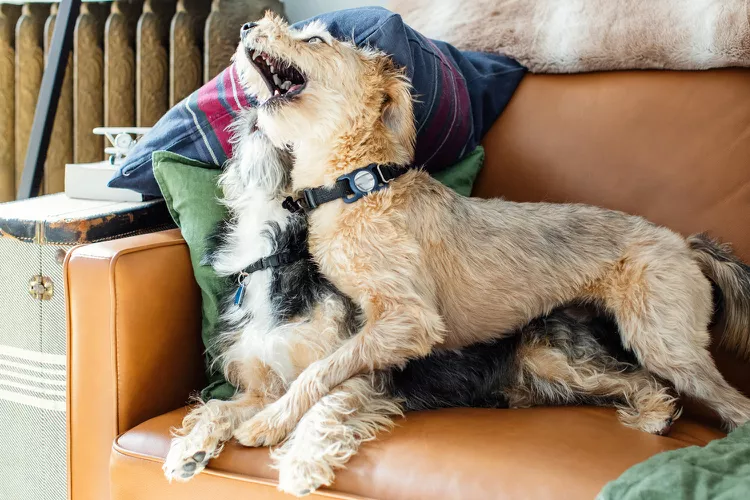
Possessive aggression in dogs is a serious problem for dog owners and a common reason that dogs are referred to animal behavioral specialists. When a dog behaves aggressively toward people or other animals that approach valued objects such as a toy, treat, or food, the behavior is described as possession aggression or resource guarding. If you determine that this is the cause of your dog's aggression, you may be able to stop it with some training and behavior modification. Here's how to address resource guarding or possession aggression in dogs.
What Is Resource Guarding in Dogs?
Canine resource guarding is also sometimes called possession aggression, food aggression, or toy aggression. Dogs may growl, snap, or bite to protect a resource, such as food, toys, beds, or other objects, from being taken away by another dog or person. This is the dog's way of saying, "Back off! This is mine!"
What your dog considers an object worthy of possessing may not be something you think has any value. For instance, some dogs are just as likely to snarl and snap over a tissue fished out of the trash can as over a favorite toy.
Signs of Possession Aggression in Dogs
To determine whether your dog is displaying resource guarding behavior, watch closely for signs of aggressive behavior in certain situations:
- Growling when a person or another animal approaches their food bowl
- Growling, snapping, or biting when someone tries to take away a toy or bone
- Fighting with other dogs over various possessions or favored people
- Showing physical signs that it may bite when approached with something of value to it or resting in a coveted spot
Different dogs may display varying degrees of aggression. Some dogs only show aggression in connection with a specific object and nothing else. For instance, a dog may not care if people or other animals approach while they're playing with a toy. But the same dog may snap or growl if it's approached while chewing on a pig's ear.
Other dogs display aggression over practically anything they find around the house, including children's toys, your shoes or clothing, and other random objects.
Different dogs display aggression differently as well. Some dogs never do more than curling a lip or mildly growling. Other dogs may nip or bite someone who approaches while they're eating.
It's also possible for aggression to escalate over time. A dog may start with a small growl over the food bowl, but if the warnings are ignored, the dog may resort to biting to protect their things.
Why Do Some Dogs Display Possession Aggression?
Possession aggression in dogs is a natural behavior that originates from the instinct to react to a perceived threat. Although it's useful, necessary behavior in the wild, it has no place in your home and needs to be managed before it develops into a serious problem. Reasons for resource guarding may include:
- Acquired behavior: Some puppies learn resource guarding behavior from their mothers or littermates. Even pups only a few weeks old have been observed growling over food bowls.
- Arrival of a rival: A single dog in your household may never show signs of possession aggression. But if you adopt another dog, squabbles over toys, food bowls, or territories may suddenly break out.
- Shelter dog syndrome: It's not uncommon for dogs that spend a long time in an animal shelter to develop a problem with possession aggression. This may be because they see the other shelter dogs as competition for limited resources.
How to Stop Possession Aggression
If the sign your dog exhibits is growling, be sure you are dealing with the growling properly. The worst thing you can do is to force your dog to give up the item he's protecting. You could get injured and your dog will learn nothing. Instead, teach your dog to trust you around its treasures. It's better to find a way to convince your dog that giving up the item means something good will happen.
Offer a Special Reward
Instead of taking away your dog's treasured object, try introducing something your dog may find even more valuable, like a special treat or a new toy. If your dog is holding the item he is guarding, you can use the "drop it" cue to get your dog to give up the item. Just make sure you have a valuable reward.
After your dog stops guarding and gets the other reward, you can let him have the item he was guarding back. Repeat the exercise often, each time your dog is resource guarding. Over time, your pet will learn that there is no need to protect its possessions.
Try a Multi-Step Conditioning Process
Some trainers recommend a multi-step process that conditions a dog to willingly move on from a resource. This can work well with meals. Place several dog bowls around a large room. Put bland food in one bowl. While your dog eats, add a more desirable food to another bowl that is at a distance. Do not get close enough to evoke an aggressive response; just let your dog see that you are offering a valuable alternative. Continue to add more valuable food to additional bowls, but stop if your dog shows aggression.
Keep Highly Desirable Items Away From Your Dog
In the initial stages of treatment, it is best to keep highly desirable objects away from your dog, or only given in confined, controlled circumstances such as in their crate. Make sure these items are kept away from your pet so that they can't steal them when you're not looking. Start behavioral modification exercises like those described above, with items that are guarded less heavily, then work your way up to the items that are more valuable to your dog.
When to Consult a Professional
If your dog is actually trying to bite, you must be very careful. If you are not seeing improvement on your own, or if your dog's aggression is getting worse, consider getting help from a dog trainer or behaviorist to correct your dog's behavior.